
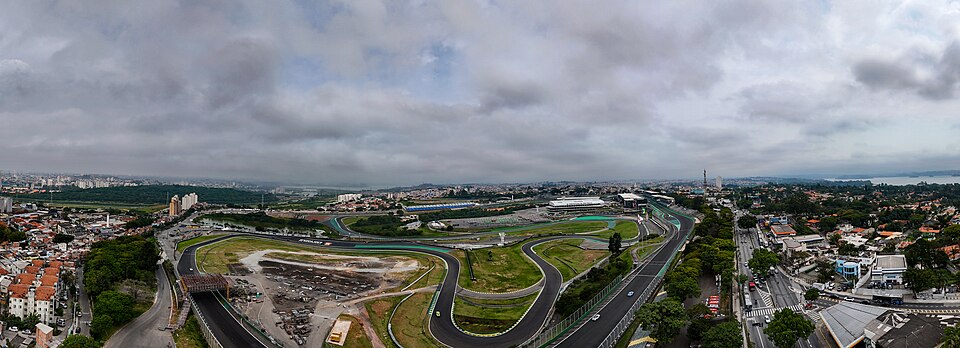

INTERLAGOS: WHERE HISTORY NEVER RUNS IN A STRAIGHT LINE
Antonelli arrives as world champion, Verstappen looks to build on his recent resurgence, and Hamilton reaches 400 Grands Prix at a Brazilian circuit that promises plenty of drama.
 James Whitmore. Suite Información.- Some circuits are part of the calendar. Others are part of the history of Formula 1. Interlagos unquestionably belongs in the second category. Its corners have decided championships, ended dreams and produced some of the sport’s most memorable moments. This weekend, from 6 to 8 November, the São Paulo Grand Prix returns with a compelling mix of famous names, unfinished business and more than enough reasons to keep fans watching.
The biggest story is Andrea Kimi Antonelli’s arrival in Brazil as the 2026 world champion. The young Mercedes driver secured the title in Mexico, becoming the youngest world champion in Formula 1 history. It is an extraordinary achievement and a clear sign that a new star has emerged in a sport that demands immediate results and is often unforgiving when expectations are not met.
Yet winning a title does not mean it is time to ease off. Antonelli still has races to contest and a reputation to strengthen. Winning a championship is one thing; proving that an era can be built around that success is quite another. Interlagos offers him the opportunity to begin answering that second question.
Standing among the principal challengers is Max Verstappen, fresh from victory in Mexico and another reminder that a championship battle should never be considered finished before the chequered flag falls. The Dutchman remains one of the most difficult drivers to beat: quick, aggressive when necessary and capable of turning a seemingly modest opportunity into a race-winning performance.
Interlagos seems tailor-made to test those qualities. The Brazilian circuit combines flowing corners, elevation changes, demanding braking zones and a straight that can provide the perfect opportunity for a decisive overtaking move. It is not a track that forgives mistakes, nor one where a fast car alone guarantees success. Race management, tyre conservation and decisions from the pit wall can prove just as important as outright pace.
Mercedes has another reason to approach the weekend with confidence. The team arrives with a 126-point lead over Ferrari in the constructors’ championship and has an opportunity to settle that contest as well. Having already secured the drivers’ title with Antonelli, clinching the teams’ championship would confirm an exceptional season for the German outfit.
Ferrari, however, will not simply watch its rivals celebrate. The battle for the leading positions remains important, and every result can influence the final balance of the season. In Formula 1, where prestige is measured by titles as well as the ability to respond under pressure, nobody wants to end the year as a mere spectator.
Then there is Lewis Hamilton, whose latest milestone deserves recognition even in a sport overflowing with records. The British driver will reach 400 Grand Prix starts in Brazil, a figure that reflects longevity, discipline and an extraordinary ability to remain competitive across several generations of racing cars.
Hamilton also enjoys a special relationship with Brazil. His admiration for Ayrton Senna and the affection he receives from local fans make Interlagos more than just another stop on the calendar. The seven-time world champion arrives still determined to compete and pursue further results. In a sport that rarely offers many second chances, his continued presence at the front is a story in its own right.
Brazilian fans will also have homegrown talent to support. Gabriel Bortoleto will contest his home Grand Prix with Audi, while Rafael Câmara joins the Formula 1 grid with Haas for his debut in the category. Brazil therefore has two representatives on the grid, a particularly significant moment for a country that has produced legendary names such as Emerson Fittipaldi, Nelson Piquet and the unforgettable Senna.
Racing in front of home supporters can provide an extraordinary boost, but it also brings enormous responsibility. Bortoleto already understands the pressure of Interlagos; for Câmara, the occasion adds an emotional challenge to an already demanding sporting debut. Both will need to balance the excitement of representing their country with the concentration required in a competition where mistakes are costly.
This weekend’s schedule does not include a sprint race. There will be two practice sessions on Friday, a third on Saturday and qualifying ahead of Sunday’s Grand Prix, which is scheduled for 71 laps. The format gives teams time to fine-tune their cars, but they must also interpret the conditions of a circuit that can change significantly from one day to the next.
Weather will be one of the major unknowns. Brazil has a long history of rain-affected races, and a wet track can completely disrupt the expected order. A well-timed tyre decision can turn a driver into the star of the afternoon; a late pit stop or a poor strategic gamble can undo an entire weekend’s work.
That is why Interlagos rarely lends itself to comfortable predictions. Qualifying will identify the favourites, but the race itself will deliver the verdict. Traffic, strategy, pit stops and the possible intervention of a safety car can rewrite the script when least expected.
The drivers’ championship has been decided, but plenty of stories remain unfinished. Antonelli wants to prove that his title is the beginning of something special; Verstappen aims to build on his recent form; Mercedes hopes to complete the championship double; Hamilton celebrates 400 Grands Prix; and Brazil welcomes its drivers with the hope of another memorable weekend.
Interlagos does not need to manufacture suspense. It has carried it for decades. All that remains is to switch off the lights, send the cars hurtling towards the first corner and remember that, in Brazil, history usually reserves the right to write its own ending.
James Whitmore
Formula 1 Correspondent · Suite Información
 James Whitmore. Suite Información.- Hay circuitos que forman parte del calendario y circuitos que forman parte de la historia. Interlagos pertenece, sin discusión, al segundo grupo. En sus curvas se han decidido campeonatos, se han hundido aspiraciones y han nacido algunas de las páginas más memorables de la Fórmula 1. Este fin de semana, del 6 al 8 de noviembre, el Gran Premio de São Paulo regresa con una combinación de grandes nombres, cuentas pendientes y motivos suficientes para no perder detalle.
La gran novedad es que Andrea Kimi Antonelli aterriza en Brasil como campeón del mundo de 2026. El joven piloto de Mercedes certificó el título en México, convirtiéndose en el campeón más joven de la historia de la categoría. Un logro extraordinario que confirma el nacimiento de una nueva figura en un deporte acostumbrado a exigir resultados inmediatos y a devorar con la misma rapidez a quienes no están a la altura de las expectativas.
Pero una corona no significa que haya llegado el momento de levantar el pie del acelerador. Antonelli todavía tiene carreras por delante y una reputación que consolidar. Ganar un campeonato es una cosa; demostrar que se puede construir una era alrededor de ese éxito es otra muy distinta. En Interlagos tendrá la oportunidad de empezar a responder a esa segunda pregunta.
Al otro lado del garaje de los aspirantes aparece Max Verstappen, que llega después de imponerse en México y vuelve a demostrar por qué nunca debe darse por terminado un campeonato antes de que caiga la bandera a cuadros. El neerlandés sigue siendo uno de los pilotos más incómodos para cualquier rival: rápido, agresivo cuando hace falta y capaz de convertir una oportunidad aparentemente pequeña en una victoria.
Interlagos parece diseñado para poner a prueba precisamente esas cualidades. El circuito brasileño combina curvas enlazadas, cambios de elevación, frenadas exigentes y una recta en la que se puede preparar un adelantamiento decisivo. No es una pista que perdone los errores ni un lugar donde baste con disponer de un coche rápido. La lectura de carrera, la gestión de los neumáticos y las decisiones desde el muro pueden resultar tan determinantes como la velocidad pura.
Mercedes, entretanto, tiene una segunda razón para mirar con optimismo el fin de semana. La escudería llega con una ventaja de 126 puntos sobre Ferrari en el campeonato de constructores y dispone de una oportunidad para resolver también esa batalla. Después de conquistar el título de pilotos con Antonelli, cerrar el campeonato por equipos supondría confirmar una temporada extraordinaria para la estructura alemana.
Ferrari no tiene intención de limitarse a contemplar la celebración de sus rivales. La lucha por las posiciones de cabeza continúa siendo importante y cada resultado puede cambiar el balance final de la temporada. En una Fórmula 1 donde el prestigio se mide tanto por los títulos como por la capacidad de responder bajo presión, nadie quiere terminar el año como un simple espectador.
Y entonces aparece Lewis Hamilton, protagonista de un hito que merece una pausa incluso en un calendario saturado de récords. El británico alcanzará en Brasil los 400 Grandes Premios disputados, una cifra que resume longevidad, disciplina y una capacidad extraordinaria para mantenerse competitivo a través de diferentes generaciones de monoplazas.
Hamilton tiene, además, una relación especial con Brasil. Su admiración por Ayrton Senna y el cariño que recibe de la afición local convierten Interlagos en algo más que una parada del campeonato. El siete veces campeón del mundo llega todavía dispuesto a competir y a perseguir nuevos resultados. En un deporte que no suele conceder demasiadas segundas oportunidades, su permanencia en primera línea constituye una historia por sí misma.
La afición brasileña tendrá también motivos para mirar hacia casa. Gabriel Bortoleto afronta su Gran Premio nacional con Audi, mientras Rafael Câmara se incorpora a la parrilla de Fórmula 1 con Haas en su debut en la categoría. Brasil recupera así dos representantes en la parrilla, un acontecimiento especialmente significativo para un país que ha dado al automovilismo nombres tan importantes como Emerson Fittipaldi, Nelson Piquet y el inolvidable Senna.
Correr ante el público propio puede ser un impulso extraordinario, pero también una responsabilidad enorme. Bortoleto conoce ya la presión de Interlagos; para Câmara, el estreno añade una dificultad emocional a un desafío deportivo de primer nivel. Ambos tendrán que encontrar el equilibrio entre la ilusión de representar a su país y la concentración que exige una competición donde cualquier error se paga caro.
El programa de este fin de semana no incluye carrera sprint. Habrá dos sesiones de entrenamientos el viernes, una tercera el sábado y la clasificación, antes de la carrera del domingo, prevista a 71 vueltas. Eso concede a los equipos tiempo para ajustar sus monoplazas, pero también obliga a interpretar correctamente las condiciones de una pista que puede cambiar considerablemente de un día para otro.
La meteorología será una de las incógnitas. Brasil tiene una larga tradición de carreras condicionadas por la lluvia, y un asfalto húmedo puede alterar por completo el orden previsto. Una decisión acertada sobre los neumáticos puede convertir a un piloto en protagonista; una parada tardía o una apuesta equivocada puede arruinar el trabajo de todo el fin de semana.
Por eso Interlagos no admite pronósticos cómodos. La clasificación señalará a los favoritos, pero la carrera será la que dicte sentencia. El tráfico, las estrategias, las paradas en boxes y la posible aparición de un coche de seguridad pueden cambiar el guion cuando menos se espera.
El Mundial de pilotos ya tiene dueño, pero todavía quedan historias por escribir. Antonelli quiere demostrar que su corona es el comienzo de algo grande; Verstappen busca prolongar su buen momento; Mercedes aspira a completar el doblete de títulos; Hamilton celebra cuatrocientos Grandes Premios; y Brasil recibe a sus pilotos con la esperanza de volver a disfrutar de un fin de semana memorable.
Interlagos no necesita fabricar suspense. Lo lleva incorporado desde hace décadas. Basta con apagar los semáforos, dejar que los coches se lancen hacia la primera curva y recordar que, en Brasil, la historia suele reservarse el derecho a escribir su propio final.